


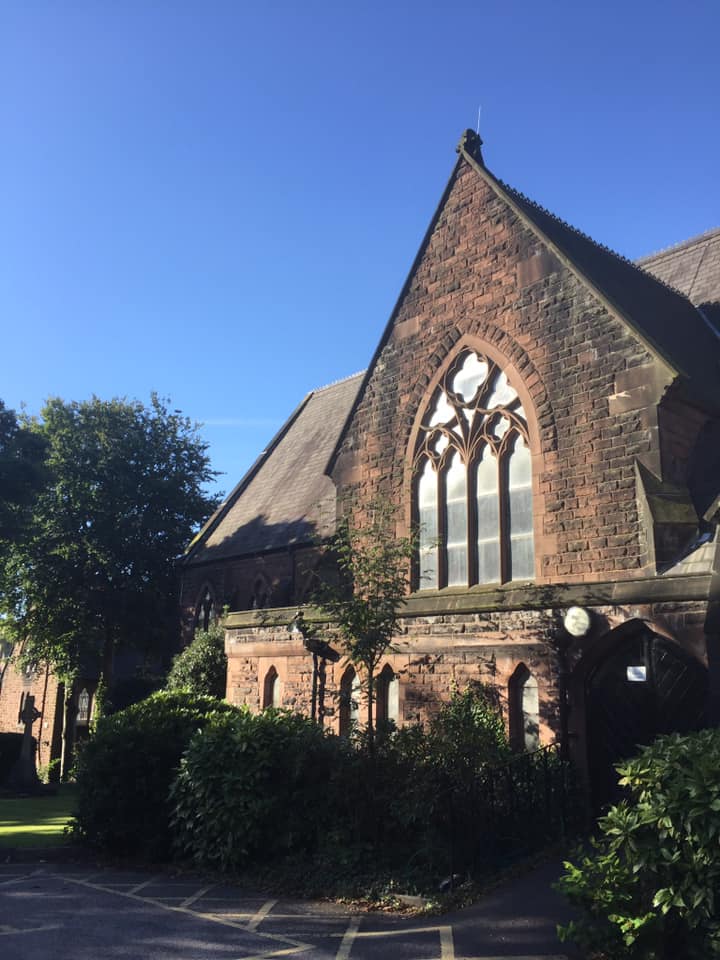
At St Mary's Church, Woolton, becoming a “Dementia-Friendly Parish” is not a slogan or a one-off project. It is an ongoing mission rooted in compassion, practical support, and community.
Over the past several years, the parish has become a lifeline for people living with dementia and for the carers and families who support them every day. Through dementia awareness/information sessions, social gatherings, exercise classes, and partnerships with health professionals and charities, St Mary’s has created a welcoming space where people are understood, valued, and never left to struggle alone.
Parish administrator Ann O’Neill explained: “We say, ‘Becoming a Dementia-Friendly Parish’, because it’s an ongoing process.”
That process began after a moment that deeply affected her.
Ann explained “I was in the office one Monday morning several years ago, and a man came to the door… He looked very dishevelled and was shaking. He said he’d had a call to say his wife had died in Whiston but didn’t know whether it was Whiston hospital or care home.”
Ann invited the man into the presbytery and made him comfortable, offering tea and biscuits as she worked through his confused state. It gradually became clear that he had memory issues and he wasn’t even sure whether he’d already buried his wife months earlier.
After a lot of phone calls to hospitals, care homes, GP surgeries etc, it was discovered that his wife had died at Whiston Hospital that day. Together with a volunteer, they arranged the funeral in conjunction with local funeral directors. It was later confirmed he had been living with dementia for some seven years.
It transpired that this man had been a long-standing parishioner, but nobody knew of him. He was an only child and him and his wife had never had children. Ann explained that essentially, he was in the world on his own. Ann discussed the matter with the then parish priest, Father Tim Buckley, who agreed that as a caring Christian community, there was an urgent need to develop a strategy; a protocol, for parishioners living with dementia.
That encounter became the catalyst for everything that followed.
Today, St Mary’s works closely with organisations including the Alzheimer’s Society, Dementia Friends, Liverpool Dementia Action Alliance (LDAA), TIDE (Together in Dementia Every Day) SURF (Service Users Reference Forum) and NHS Memory Services.
The parish regularly hosts dementia awareness and information sessions, often featuring specialist speakers such as Jill Pendleton, Dementia Lead at NHS Mersey Care, Serena Jones, Specialist Nurse in Dementia Care, and Dementia Friends Ambassador Mary Monkhouse.
Mary, a parishioner and volunteer, has become one of the driving forces behind the parish’s work. A trained Dementia Friends Ambassador, she delivers awareness sessions across the region.
“I’ve done sessions for St John’s Precinct,” she said. “They were training all the cleaners, all the security guards, everyone. I thought it was very forward-thinking of them.”
The Dementia Friends sessions encourage participants to understand the everyday realities of dementia and consider practical ways they can help others.
“Everybody who attends gets a badge to say they are a Dementia Friend,” Mary explained. “Part of the session is thinking about one action you can take.”
Much of the learning at St Mary’s focuses on small but important changes that can make life easier for people living with dementia.
Ann described one simple example involving parish newsletters.
“One Christmas, a parishioner had mentioned that her mum had dementia and had asked what day Christmas Eve was. At that time the newsletter just read: ‘Christmas Eve Mass.’ So now we include the day as well as the date e.g.: ‘Christmas Eve, Wednesday 24 December.’ One small adjustment can make a big difference.
The parish has also learned how visual perception can be affected by dementia.
“A black doormat on a light floor can look like water to somebody with dementia,” Ann explained. “They might be frightened to step on it.”
Alongside awareness training, St Mary’s has become known for its joyful dementia-friendly events. On the last Friday of every month, parishioners and visitors gather in the parish hall for an Afternoon Tea and Singalong, an initiative that began during Dementia Action Week in 2018 and has continued ever since.
The gatherings are filled with joy, music, dancing, laughter, and companionship.
“We always sing ‘Que Sera, Sera’ at the end” Mary added: “I defy anybody not to walk out in tears, but with a huge grin on your face.”
Importantly, the music is not limited to wartime favourites.
“I asked one lady who was nearly 90 years old what she’d like the band to play. Maybe Penny Arcade? She told me she wanted Tina Turner,” Ann laughed. “So, then she got up and danced to ‘Simply the Best’, and they’re doing YMCA and everything. It’s fabulous.”
The sessions have become deeply meaningful for many families.
Mary remembered bringing her auntie Kath, who lived with dementia before she passed away during lockdown.
“She absolutely loved the afternoon tea,” Mary said. “It would always put a big smile on her face. Phil the entertainer used to say, ‘Here’s my little smiler!’”
For carers, the events offer something equally valuable: connection and understanding.
“When you’re caring for somebody at home, it can become very isolating,” Ann said. “Just having time with other people who understand what you’re going through makes such a difference.”
The parish also hosts regular “Love To Move” sessions – dementia-friendly exercise and dance classes designed to stimulate both physical movement and brain activity. The classes are run by the British Gymnastics Foundation and attract dozens of attendees each week.
Mary explained that the exercises are specifically designed to challenge coordination and cognitive function.
“The instructor does things like tapping your head and rubbing your stomach,” she said. “It’s helping the brain work in different ways.”
St Mary’s hall is also used by Liverpool Memory Services for courses supporting newly diagnosed people and their carers.
“The Memory Service approached us as they had read about the things we were doing here,” Mary explained. “People can come for signposting, support, and help understanding what they can still do safely.”
Throughout their work, both Ann and Mary emphasise an important message: dementia does not erase a person’s humanity, personality or emotional life.
Mary often uses a “bookcase analogy” during her sessions.
“The top shelves are your most recent memories,” she explained. “As dementia progresses, it’s as if someone is shaking the bookcase, and the books begin falling from the shelves, starting with the most recent memories first.”
Yet emotional memory often remains strong, even when factual memory fades.
“Say your mum is suffering with dementia, and you take her to the park for ice cream and have a lovely day.
“She might not remember you’ve taken her for an ice cream,” Ann explained, “but she’ll still remember the feeling of joy and happiness.”
That insight shapes the parish’s entire approach.
“It’s also about striking a balance between giving them their independence and keeping them safe,” Ann added. “When someone you love is suffering, the instinct is to put your arms around them and do everything for them, but the brain is a muscle, and they need to keep doing things for themselves as best they can.”
“It’s easy to underestimate what people still want to do,” Mary reflected. “It’s lovely seeing everybody dancing, chatting and gossiping together.”
Ann agreed: “They’re still the people that we knew.”
The work at St Mary’s continues to grow, supported by volunteers, parishioners, local organisations and families whose lives have been touched by dementia. Both Ann and Mary hope other parishes will follow their example.
“There are so many things you can do,” Ann said. “And many of them are very simple.”
At the heart of it all is a commitment to ensuring nobody faces dementia alone, and a determination to build a Church community where every person is welcomed, understood and cherished.
.jpg)
.jpg)